


The JournalTaxes
Sales Tax in the United States vs. the World: Everything You Need to Know
By Andres Platts · July 23, 2025 · 3 min read
Quick answer
Managing sales taxes can be challenging for international companies. This blog explains the differences between the U.S. Sales Tax system and global VAT, as well as how your company can comply with both regulations. We provide examples, common challenges, and solutions to optimize tax compliance.



1. Key Trends in Sales Tax and VAT Management for 2025
Digitalization continues to drive transformation in tax administration, and 2025 will be no exception. In the United States, there is expected to be increased adoption of automation technologies to manage Sales Tax due to the growing complexity of state and local regulations.
Meanwhile, in international markets applying VAT, updates in e-invoicing systems and the implementation of real-time reporting models are becoming more prevalent.
- States with High Tax Challenges: Texas, California, and New York are among the most complex jurisdictions for Sales Tax compliance.
- New International Regulations: Countries in Europe and Latin America are implementing stricter digital platforms to prevent tax evasion.
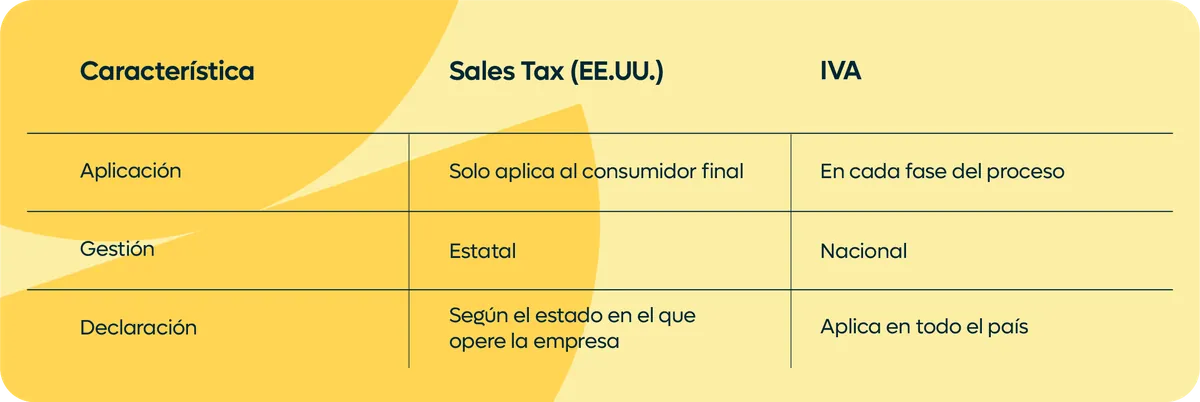
2. Differences Between Sales Tax and VAT
3. International Tax Obligations: An Extended Comparison
Beyond the table, it’s crucial to consider how reporting and payment requirements directly impact business operations:
Meanwhile, in international markets applying VAT, updates in e-invoicing systems and the implementation of real-time reporting models are becoming more prevalent.
- Complex Tax Calculations: While Sales Tax requires sellers to assign specific rates based on the buyer's location, VAT demands more detailed reporting throughout the entire value chain.
- Compliance Responsibility: In the U.S., the burden primarily falls on local businesses, whereas VAT systems require even foreign sellers to register and comply with regulations.

4. Strategies to Simplify International Tax Management
- 01Automate Processes: Use tools like Avalara, Vertex, and TaxJar integrated with your ERP to calculate rates, make adjustments, and generate reports.
- 02Review Tax Amendments Regularly: Update your processes periodically to avoid penalties for changing regulations.
- 03Internal Training: Ensure your team is aware of the latest tax changes.
Explore our resources to optimize your tax processes:
- How to Calculate Sales Tax in the United States.
- Guide to Filing Business Taxes in the U.S.
- Key Tax Filing Deadlines in the U.S. 2025.
- Differences Between VAT and Sales Tax.

5. Conclusion
The global tax environment is increasingly complex, and companies must adapt to operate efficiently in a competitive market. Whether managing Sales Tax in the U.S. or VAT in international markets, understanding the key differences and applying effective strategies will make a significant impact in 2025.
At Prodezk, we’re ready to be your partner on this journey, offering personalized solutions to ensure your tax compliance and optimize your global business operations in the United States.



A firm or advisor? Refer clients and build alongside Prodezk.
Further reading

Taxes8 min read
What Is a Tax Identification Number (TIN)?, TIN vs SSN Explained
Understand the differences between a Tax Identification Number (TIN) and SSN. Which one do you need for your business in the U.S.? Discover real examples and common mistakes.

Taxes3 min read
2025 Tax Season: Key Changes and How to Prepare
As tax season in the U.S. approaches, we offer a complete guide on changes to the tax brackets for 2025. Discover updated rates, deductions, benefits, and strategies to make the most of the fiscal adjustments, ensuring an optimized tax return for the upcoming year.

Taxes17 min read
Why Doesn’t the United States Have a VAT? Key Differences Between VAT and US Sales Tax
Explore VAT in the United States: Why there's no federal system, how sales tax works across states, and implications for international businesses in 2026. Learn compliance tips, refunds, and cost-saving strategies from experts. Get started with Prodezk today!