


The JournalCompliance
Cost to Dissolve LLC: What You Need to Know
By Andres Platts · March 31, 2026 · 11 min read
Quick answer
Navigating the costs of dissolving an LLC can be complex. This guide outlines essential expenses and steps involved to ensure a smooth and effective process.


Cost to Dissolve LLC: What You Need to Know About LLC Dissolution Fees and Process
Dissolving a Limited Liability Company (LLC) is a major decision that brings costs and required steps. This article outlines the fees you may face, how costs differ by state, and other expenses that can arise. Read on to know what to expect and why following proper procedures helps avoid future liabilities.
LLC dissolution can be confusing. This guide explains typical fees, state filing costs, and the step-by-step process to close an LLC. It also covers when professional help can be useful and the risks of doing it yourself.
Key Takeaways
- Dissolving an LLC involves costs like state filing, legal, and accounting fees.
- State filing fees for LLC dissolution vary significantly and can affect overall costs.
- Additional costs may include settling debts, tax obligations, and notification expenses.
- The dissolution process requires steps like member approval and filing Articles of Dissolution.
- Legal compliance is crucial to avoid penalties and ensure proper LLC termination.
- DIY dissolution is cost-effective but risks errors; professional services offer expertise and efficiency.
- Improper dissolution can lead to financial penalties and ongoing liabilities.
- State-specific resources provide accurate information on filing fees and dissolution processes.
What Are the Typical LLC Dissolution Fees and Filing Costs?

Typical fees vary by state and situation. Common costs include state filing fees, legal fees if you hire an attorney, and accounting fees to close out finances. Expect wide variation depending on your state and complexity.
- 01State Filing Fees : Most states require a filing fee to process the dissolution paperwork, which can range from $0 to $500.
- 02Legal Fees : If you choose to hire an attorney to assist with the dissolution, legal fees can add to the overall cost, typically ranging from $200 to $1,500 depending on the complexity of your LLC.
- 03Accounting Fees : You may also incur costs for accounting services to ensure all financial obligations are settled before dissolution, which can vary widely based on your accountant's rates.
Budgeting for these items up front helps avoid last-minute surprises.
Plan for these costs so the dissolution process doesn’t become an unexpected financial burden.

How Do State Filing Fees Vary for LLC Dissolution?
State filing fees differ across the United States. Some states charge a flat fee; others use factors like revenue to set costs. These rules affect the total cost to dissolve your LLC.
Research your state’s filing fees to prepare. Examples include:
- California : $20
- New York : $60
- Texas : $40
- Florida : $25
These differences mean it’s important to check your state’s regulations to avoid surprises.
What Additional Costs Should LLC Owners Expect During Dissolution?
Beyond filing fees, other costs can arise. Common additional expenses include settling outstanding debts, addressing tax obligations, and paying notification or publication fees.
- 01Outstanding Debts : Any remaining debts or obligations must be settled before dissolution, which can incur additional costs.
- 02Tax Obligations : LLCs may have tax liabilities that need to be addressed, including final tax returns and any applicable penalties.
- 03Notification Costs : If required, notifying creditors and stakeholders can involve additional expenses, such as publication fees for legal notices.
Knowing these potential costs ahead of time makes the dissolution smoother.
What Is the Step-by-Step LLC Dissolution Process?
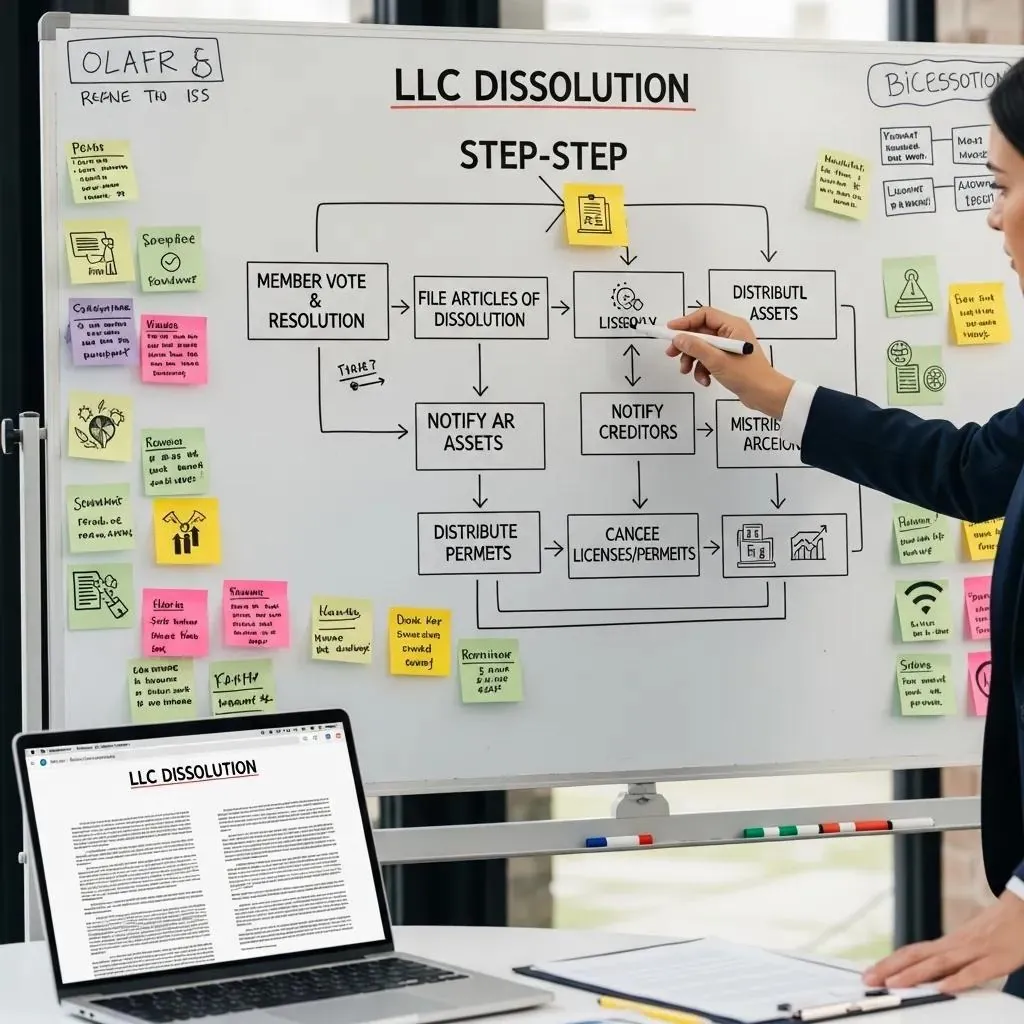
Dissolution requires a sequence of steps to meet state law. The general process covers member approval, filing Articles of Dissolution, settling debts, distributing assets, and filing final tax returns.
- 01Member Approval : Obtain approval from LLC members to dissolve the company, as outlined in the operating agreement.
- 02Filing Articles of Dissolution : Submit the necessary paperwork to the state, including the Articles of Dissolution, along with any required fees.
- 03Settling Debts and Obligations : Pay off any outstanding debts and obligations to creditors.
- 04Distributing Remaining Assets : After settling debts, distribute any remaining assets among the members according to the operating agreement.
- 05Final Tax Returns : File final tax returns with the IRS and state tax authorities.
Follow each step carefully to reduce legal risk and ensure a clean closure.
How to Officially Close an LLC: Formal Dissolution Steps
To close an LLC officially, follow the formal steps set out by your state. These usually include reviewing your operating agreement, holding a member vote, filing dissolution paperwork, notifying creditors, and distributing assets.
- 01Reviewing the Operating Agreement : Check the operating agreement for specific dissolution procedures and member voting requirements.
- 02Holding a Meeting : Conduct a meeting with LLC members to discuss and vote on the dissolution.
- 03Filing the Articles of Dissolution : Complete and file the Articles of Dissolution with the state, including any required fees.
- 04Notifying Creditors : Inform creditors of the dissolution and settle any outstanding debts.
- 05Distributing Assets : Distribute remaining assets to members as per the operating agreement.
Completing these formal steps helps ensure the dissolution is recognised and all obligations are addressed.
What Are the Legal Compliance Requirements for LLC Termination?
Legal compliance matters. States have specific requirements, commonly filing Articles of Dissolution, settling debts, and completing final tax filings, to make the termination valid.
- Filing Articles of Dissolution : This document must be filed with the state to officially terminate the LLC.
- Settling Debts : All debts and obligations must be settled before dissolution to avoid personal liability for members.
- Final Tax Filings : LLCs must file final tax returns and pay any outstanding taxes to comply with state and federal regulations.
Not meeting these requirements can lead to penalties and legal complications.

How Does DIY LLC Dissolution Compare to Professional Services?

Many owners weigh DIY against hiring professionals. DIY saves money but takes time and carries risk. Professionals offer expertise and speed but cost more.
- DIY Dissolution : Cost-Effective: Handling the process yourself can save on legal fees.Time-Consuming: It may take more time to research and complete the necessary paperwork.Risk of Errors: Mistakes in the process can lead to legal issues.
- Professional Services : Expert Guidance: Professionals can navigate the complexities of the dissolution process.Higher Costs: Hiring a service incurs additional fees.Efficiency: Professionals can expedite the process, ensuring compliance with all regulations.
Choose based on your comfort with legal tasks, the complexity of your LLC, and your budget.
These usually include reviewing your operating agreement, holding a member vote, filing dissolution paperwork, notifying creditors, and distributing assets.
What Are the Benefits of Using a Paid LLC Dissolution Service?
Paid services provide experience, save time, and reduce the risk of errors. They can handle paperwork and deal with state authorities on your behalf.
- 01Expertise : Professionals have experience navigating the dissolution process and can ensure compliance with state laws.
- 02Time Savings : They can handle the paperwork and communication with state authorities, saving you time and effort.
- 03Reduced Risk : Professional services can help avoid common pitfalls and legal issues associated with DIY dissolution.
For those seeking a smooth, compliant dissolution, a service like Dissolve My LLC can help.
Can You Dissolve Your LLC Yourself Without Legal Risks?
You can dissolve your LLC yourself, but mistakes create legal risks. Common issues include incomplete paperwork, unresolved debts, and non-compliance penalties.
- Incomplete Paperwork : Failing to file the necessary documents can result in continued liability for the LLC.
- Unsettled Debts : Not addressing outstanding debts can lead to personal liability for members.
- Non-Compliance Penalties : Failing to comply with state regulations can result in fines and legal complications.
To reduce risk, make sure you understand every step and complete all required filings.
What Are the Common Penalties and Risks of Not Properly Dissolving an LLC?
Failing to dissolve properly can trigger fines, ongoing liabilities, and legal claims from creditors. These consequences can affect both the business and its members.
- 01Financial Penalties : States may impose fines for failing to file dissolution paperwork.
- 02Ongoing Liabilities : Members may remain personally liable for debts and obligations if the LLC is not formally dissolved.
- 03Legal Repercussions : Creditors may pursue claims against the LLC or its members if debts are not settled.
These risks highlight why following the correct dissolution process is essential.

A firm or advisor? Refer clients and build alongside Prodezk.
How Do Ongoing State Fees and Legal Penalties Accumulate?
If an LLC remains active, state fees and penalties can build up. Common issues include unpaid annual fees, late filing penalties, and creditor actions that increase liabilities.
- Annual Fees : Many states require annual fees or reports, which can add up if the LLC remains active.
- Late Fees : Failing to file required documents on time can result in additional late fees.
- Legal Action : Creditors may take legal action to recover debts, leading to further financial liabilities.
Being proactive during dissolution helps prevent these accumulating costs.
Why Is Formal LLC Dissolution Essential to Avoid Future Costs?
Formal dissolution stops future fees and limits liability. Properly dissolving your LLC lets you end annual fees, protect personal assets, and meet legal obligations.
- Eliminate Ongoing Fees : Avoid annual fees and penalties associated with maintaining an active LLC.
- Protect Personal Assets : Ensure that personal assets are not at risk due to unresolved business debts.
- Achieve Legal Compliance : Fulfill legal obligations and avoid potential legal issues in the future.
Completing the formal dissolution steps protects both the business and its owners.
What Are the Typical Timelines and Expectations for LLC Dissolution?
Timelines vary by state and the LLC’s complexity. Dissolution can take from a few days to several months. Factors like state processing times, financial complexity, and member cooperation affect the schedule.
- State Processing Times : Each state has different processing times for dissolution paperwork.
- Complexity of the LLC : More complex LLCs with multiple members or outstanding obligations may take longer to dissolve.
- Member Cooperation : Timely decision-making and cooperation among members can expedite the process.
Set realistic expectations so you can plan the closure properly.
How Long Does the LLC Dissolution Process Usually Take?
Typical processing time ranges from about 4 to 12 weeks, depending on state rules and your LLC’s situation. Outstanding obligations or delayed member decisions can lengthen this period.
- State Requirements : Some states may have longer processing times for dissolution filings.
- Outstanding Obligations : Resolving debts and obligations can extend the timeline.
- Member Decisions : Delays in member voting or decision-making can prolong the process.
Knowing these factors helps you plan and avoid unexpected delays.
What Factors Can Affect the Duration and Cost of Dissolution?
Key factors include state regulations, business complexity, and whether you hire professionals. These elements influence both time and cost.
- State Regulations : Different states have varying requirements and fees for dissolution.
- Complexity of the Business : LLCs with multiple members or complex financial situations may incur higher costs and longer timelines.
- Professional Assistance : Hiring legal or accounting professionals can increase costs but may expedite the process.
Understanding these drivers lets you prepare for the process and budget accordingly.
Frequently Asked Questions
What are the potential tax implications when dissolving an LLC?
Dissolving an LLC has tax effects: you must file final federal and state returns, report income up to the dissolution date, and settle any tax liabilities. Distributing assets can trigger capital gains. Speak with a tax professional to ensure compliance and minimise taxes.
Can I reinstate my LLC after dissolution, and what is the process?
Many states allow reinstatement, but rules vary. Usually you file a reinstatement form and pay outstanding fees or penalties. States may require resolving taxes or debts first. Check your state’s business filing office for exact steps.
What happens to the LLC's debts after dissolution?
LLCs must settle debts before formal closure. If debts remain, creditors can pursue claims against the LLC or its members depending on state law and company structure. Properly addressing obligations protects personal assets and reduces future liability.
How can I ensure compliance with state regulations during dissolution?
Follow your state’s checklist: get member approval, file Articles of Dissolution, settle debts, and keep detailed records. Consulting a lawyer can help confirm you’ve completed every required step.
What are the risks of not formally dissolving an LLC?
Not formally dissolving can leave you exposed to ongoing fees, fines, and creditor claims. Members might face personal liability for business debts. Follow the proper process to mitigate these risks.
Are there any alternatives to dissolving an LLC?
Alternatives include selling the business, transferring ownership, merging, or converting the LLC to another entity type. Some states allow conversion to a corporation. Discuss options with a business advisor to choose the best path.
How Much Does It Cost to Dissolve an LLC in Different States?
Costs vary by state. Below is a comparison of common filing fees and possible additional costs in several states.
Use state-specific fee information to budget accurately for your dissolution.
Where Can I Find State-Specific Filing Fee Information?
To find accurate fee information, owners can:
- Visit State Government Websites : Most states provide detailed information on their official websites regarding dissolution fees and processes.
- Consult Legal Resources : Legal websites often compile information on state-specific requirements and fees.
- Contact State Offices : Directly contacting state offices can provide the most accurate and up-to-date information.
Use these sources to confirm the correct fees and procedures for your state.
For a smoother, compliant process, consider guidance from Dissolve My LLC . They offer services to help you navigate the dissolution steps.
Conclusion
Knowing the costs and required steps for LLC dissolution helps you avoid future liabilities. Follow the proper process and consider professional help when needed to ensure a compliant, smooth closure. Explore our expert services for LLC dissolution and visit us to get started.
A firm or advisor? Refer clients and build alongside Prodezk.
Further reading

Compliance3 min read
When to Renew Your LLC in the United States
Renewing an LLC in the United States involves submitting the Annual Report, a crucial requirement for keeping your business active and compliant with state laws. This article explains state deadlines, the benefits of timely submission, and how we can assist you with the process.

Compliance5 min read
How to Change Your Company’s Registered Agent: Complete Guide
Find out how to change your company’s registered agent in the U.S. and ensure compliance with state regulations. Learn the key steps, requirements, and fees across different states.

Compliance6 min read
What is a Registered Agent and Why is it Essential for Your LLC in the United States?
Learn about the critical role of a registered agent for your LLC in the United States, its key responsibilities, how to select the best service, and the consequences of not having an appropriate registered agent.