


The JournalTaxes
Taxes for Businesses: Comparison Between Spain and the United States
By Andres Platts · June 5, 2025 · 4 min read
Quick answer
If you have a business in Spain and feel overwhelmed by taxes, it might be time to explore alternatives. In this blog, we analyze how businesses are taxed in Spain and the U.S., the types of taxes they must pay in each country, and the fiscal advantages of operating an LLC in the U.S. Find out how we can help you take advantage of these benefits and optimize your business.


Spain has one of the most demanding tax systems in Europe. Businesses face a variety of tax burdens that impact their profits and reinvestment capacity.

1. What Happens If You Are Taxed as an Individual?
Personal Income Tax (IRPF):
- Progressive Rate Based on Income: Marginal rates range from 19% to 47%.
- Freelancers: Taxed based on their taxable income, which is calculated as total income minus deductible expenses.
Value-Added Tax (VAT):
- Similar to businesses, freelancers must apply a 21% VAT rate to most goods and services and remit it quarterly.
Social Security for Freelancers:
- Starting in 2023, contributions are based on actual income, with a minimum monthly fee of €230 and a maximum of €500.
- Contributions are mandatory, even if income is low or non-existent.
Disadvantages of Being Taxed as an Individual:
- High Tax Rates: The progressive IRPF rates can be more expensive than the flat 25% corporate tax rate.
- Greater Personal Liability: Freelancers are personally responsible for debts or legal liabilities.
- Mandatory Contributions: Social Security payments are required regardless of income, creating a fixed financial burden.

2. Taxes Businesses Pay in Spain
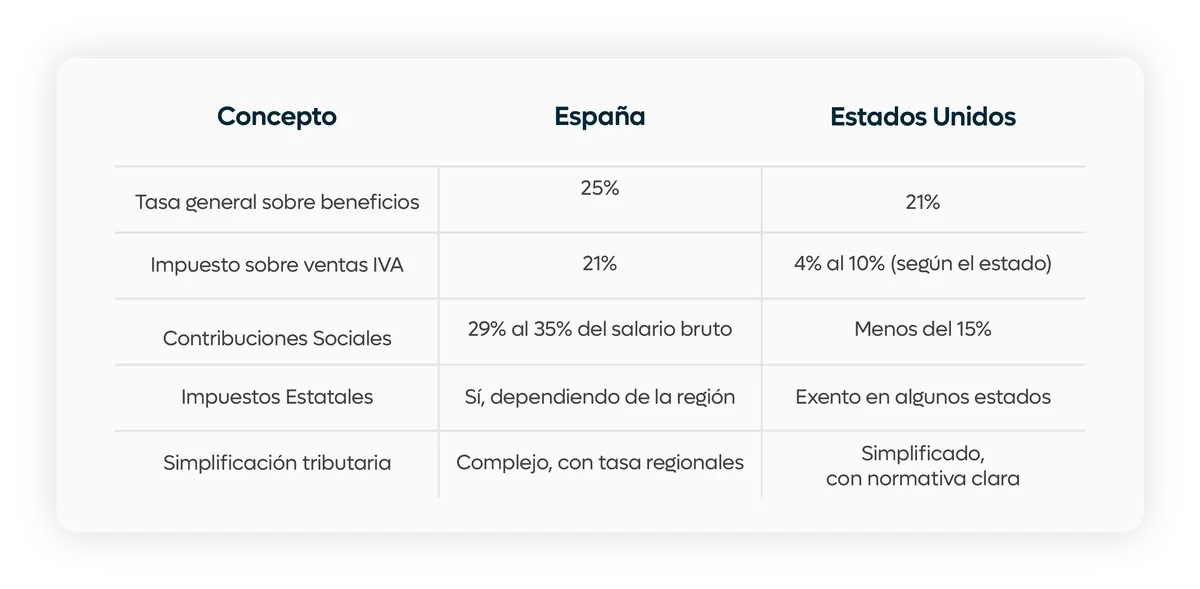
- 01Corporate Tax: General Rate: 25%. For Small and New Businesses: Reduced to 15% for the first two years of profit.
- 02Value-Added Tax (VAT): Standard Rate: 21%. Applies to most goods and services.
- 03Regional and Local Taxes: Each autonomous community can impose additional taxes, such as property tax (IBI) or economic activity tax (IAE).
- 04Social Security Contributions: Employers must make significant contributions for each employee, typically ranging from 29% to 35% of gross salary.
- General Rate: 25%.
- For Small and New Businesses: Reduced to 15% for the first two years of profit.
- Standard Rate: 21%.
- Applies to most goods and services.
- Each autonomous community can impose additional taxes, such as property tax (IBI) or economic activity tax (IAE).
- Employers must make significant contributions for each employee, typically ranging from 29% to 35% of gross salary.
This model often results in smaller businesses paying proportionally higher taxes than large corporations.
This model often results in smaller businesses paying proportionally higher taxes than large corporations.

3. How Are Businesses Taxed in the United States?
The U.S. tax system is much more competitive, designed to attract investment and promote business growth.
Business Taxes in the United States:
- 01Federal Corporate Income Tax: Flat Rate: 21% for corporations (C-Corps). LLC: Taxed as personal income if they opt for "pass-through entity" status, potentially reducing the overall tax burden.
- 02State Taxes: States like Florida, Wyoming, or Texas do not impose state income taxes on businesses, providing a significant advantage.
- 03Sales Tax: Ranges from 4% to 10%, depending on the state. Unlike VAT, this tax applies only to the final consumer.
- 04Social Security Costs: Lower compared to Spain, offering relief in labor contributions.
- Flat Rate: 21% for corporations (C-Corps).
- LLC: Taxed as personal income if they opt for "pass-through entity" status, potentially reducing the overall tax burden.
- States like Florida, Wyoming, or Texas do not impose state income taxes on businesses, providing a significant advantage.
- Ranges from 4% to 10%, depending on the state. Unlike VAT, this tax applies only to the final consumer.
- Lower compared to Spain, offering relief in labor contributions.

4. Tax Comparison: Spain vs. the United States
5. Benefits of Starting a Business in the United States
- 01Lower Tax Burden: Reduced rates and the ability to operate in states without state taxes provide significant savings.
- 02Increased Competitiveness: Operating under a U.S. LLC projects confidence and professionalism, attracting international clients.
- 03Earn in Dollars: Protect your earnings against euro volatility.
- 04Access to Investments and Global Markets: With a registered U.S. company, you can expand worldwide.
- 05Flexible Taxation: LLC structures allow you to choose how you’re taxed based on what works best for you.
Conclusion
Comparing the tax systems of Spain and the United States makes it clear why many Spanish entrepreneurs choose to establish businesses in the U.S. If you're looking to reduce taxes, earn in dollars, and expand your business, starting an LLC might be the perfect solution .
At Prodezk, we guide you through every step so you can enjoy the fiscal and operational benefits of having a business in the United States. Start today and take your business to the next level!
If you're interested in this topic, check out our blog on how to set up an LLC in the U.S. from Spain .



A firm or advisor? Refer clients and build alongside Prodezk.
Further reading

Taxes8 min read
What Is a Tax Identification Number (TIN)?, TIN vs SSN Explained
Understand the differences between a Tax Identification Number (TIN) and SSN. Which one do you need for your business in the U.S.? Discover real examples and common mistakes.

Taxes3 min read
2025 Tax Season: Key Changes and How to Prepare
As tax season in the U.S. approaches, we offer a complete guide on changes to the tax brackets for 2025. Discover updated rates, deductions, benefits, and strategies to make the most of the fiscal adjustments, ensuring an optimized tax return for the upcoming year.

Taxes17 min read
Why Doesn’t the United States Have a VAT? Key Differences Between VAT and US Sales Tax
Explore VAT in the United States: Why there's no federal system, how sales tax works across states, and implications for international businesses in 2026. Learn compliance tips, refunds, and cost-saving strategies from experts. Get started with Prodezk today!